
SeltaSquare: As Pharmacovigilance Shifts from "Regulatory Reporting" to "Data-Driven Decision-Making," Demand for PVX Grows
페이지 정보


본문
- Rising ICSR volumes and real-world data, plus tightening global regulations like ICH's E2B(R3), are exposing the limits of manual-labor-centered PV systems
- Multinationals build quality systems on the premise of inspection readiness, while domestic companies operate around minimum regulatory compliance
- Three SeltaSquare experts: "PV and DX must be combined to connect safety data across the full product lifecycle"
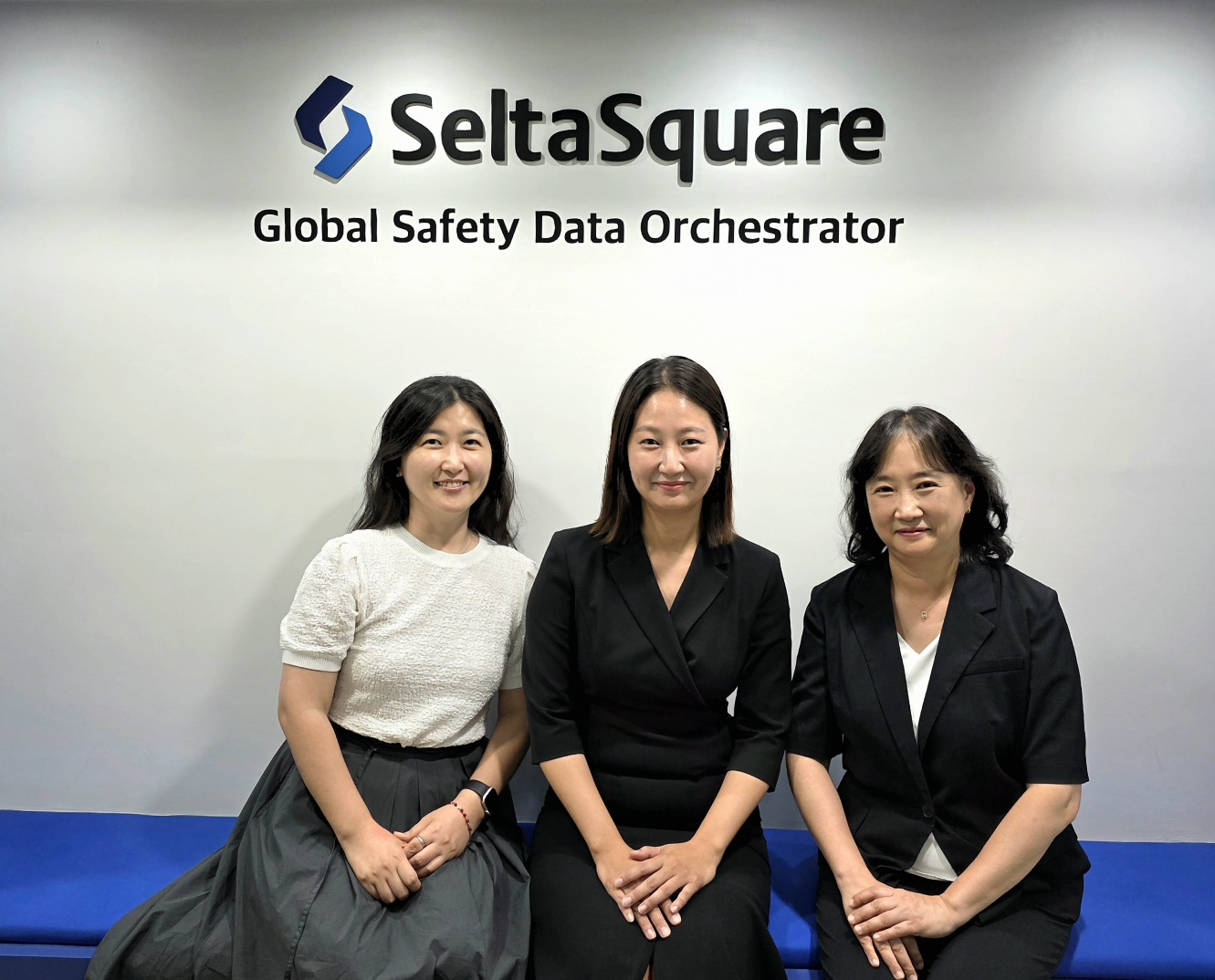
(From left) PVX Center Director Han Kyung-hee, CEO Shin Min-kyung, PV Center Director Lee Jeong-min.
Drug safety management is expanding beyond simply reporting to regulators — it now requires linking, analyzing, and interpreting the safety data collected across a product's lifecycle.
As safety data volumes grow from clinical trials and post-marketing use, and global regulations tighten, the traditional PV model — reliant on manual labor and headcount — is reaching an inflection point.
Pharmacovigilance (PV) traditionally centered on reporting individual adverse events to regulators within fixed deadlines. Now it's expected to connect safety data accumulated across clinical trials, approval, and post-marketing stages into a single flow, feeding benefit-risk assessments and risk-management strategy. Drivers of this shift include the growing volume/complexity of Individual Case Safety Reports (ICSRs), new data sources (literature, EMRs, real-world data), and more granular global standards like ICH's E2B(R3) electronic reporting format — all of which make simple data entry/submission insufficient; PV teams must now normalize data across sources, track change history and rationale, and detect meaningful safety signals.
SeltaSquare's CEO Shin Min-kyung, PVX Center Director Han Kyung-hee, and PV Center Director Lee Jeong-min discussed with Yakup how these global regulatory shifts affect PV practice and what Korean pharma/bio companies need to prepare.
Global "inspection readiness" vs. domestic "minimum compliance"
The two directors noted that while multinational and Korean pharma companies do similar PV work in principle, they differ in how they design and run quality systems. Multinationals build a common global quality system first, then layer in country-specific requirements, with FDA/EMA-style "inspection readiness" as a baseline design principle. Korean companies, by contrast, tend to build systems around meeting MFDS (Korean regulator) requirements first, adding global requirements later as overseas expansion or licensing deals materialize. Han noted that Korean regulatory inspections still tend to focus on whether an SOP exists, whereas global standards go further — checking whether the procedure was actually followed and whether supporting evidence/records were properly retained.
Structural staffing shortages driving "minimum viable PV"
Many Korean pharma and biotech companies run trial safety management, post-market AE reporting, literature searches, periodic reports, and SOP/training with limited staff — so as data volume grows faster than headcount/budget, urgent reporting deadlines get prioritized over deeper case analysis and risk-signal evaluation. This gap becomes especially visible as companies expand overseas (varying reporting deadlines/formats by country) or go through technology-transfer deals, where incoming licensees scrutinize not just clinical results but the safety database and audit trail used — Lee noted that Excel-based tracking alone can raise doubts about data management reliability during due diligence, since access control, change history, duplicate-case handling, and MedDRA coding consistency all need to be demonstrable.
From ad-hoc tasks to a dedicated function'
Lee recalled that Korea's PV function historically grew out of scattered, one-off tasks (AE reporting, MedDRA coding) handled without a unified system — building it from scratch required setting up standards and processes essentially from nothing, especially before Korea joined ICH in 2016, when few professionals had direct experience preparing safety reports for global technology-transfer products.
SeltaSquare's proposed concept, "PVX," combines PV with digital transformation (DX) — not just bolting software onto existing workflows, but having PV practitioners themselves define recurring field problems and directly participate in designing and validating solutions. Han described PVX as an organization where domain experience directly shapes solution design and validates that built features actually work from the end-user's perspective. The three leaders divide roles: Lee refines PV service delivery for CROs and pharma/bio clients, Han translates global quality standards and regulator expectations into solution design, and Shin drives the strategy of connecting safety data end-to-end across trial, approval, and post-market stages.
CEO Shin explained the goal isn't to replace PV staff with technology, but to free up experts' time from repetitive search, data entry, and format conversion so they can focus on causality assessment, signal detection, and benefit-risk judgment — creating a virtuous cycle where field-identified pain points continuously feed back into solution development.
The Original Article: [약업신문]셀타스퀘어, 약물감시 ‘규제 보고’서 ‘데이터 의사결정’으로 PVX 전환 요구 커진다
